PSA Prostate Home Test Kit – Rapid Results in 15 Minutes
Check your PSA privately at home with one simple finger-prick blood test. This rapid PSA self-test shows whether your prostate specific antigen (PSA) level is 4 ng/mL or above, in around 15 minutes. No GP appointment, no sample to post, and discreet delivery across the UK.
- Results in 15 minutes
- Simple finger-prick test
- Discreet packaging
- No appointment
- Checks
- Whether PSA is at or above 4 ng/mL (not your exact level)
- Sample
- Finger-prick blood
- Results
- In around 15 minutes
- Delivery
- Ships within 1 working day
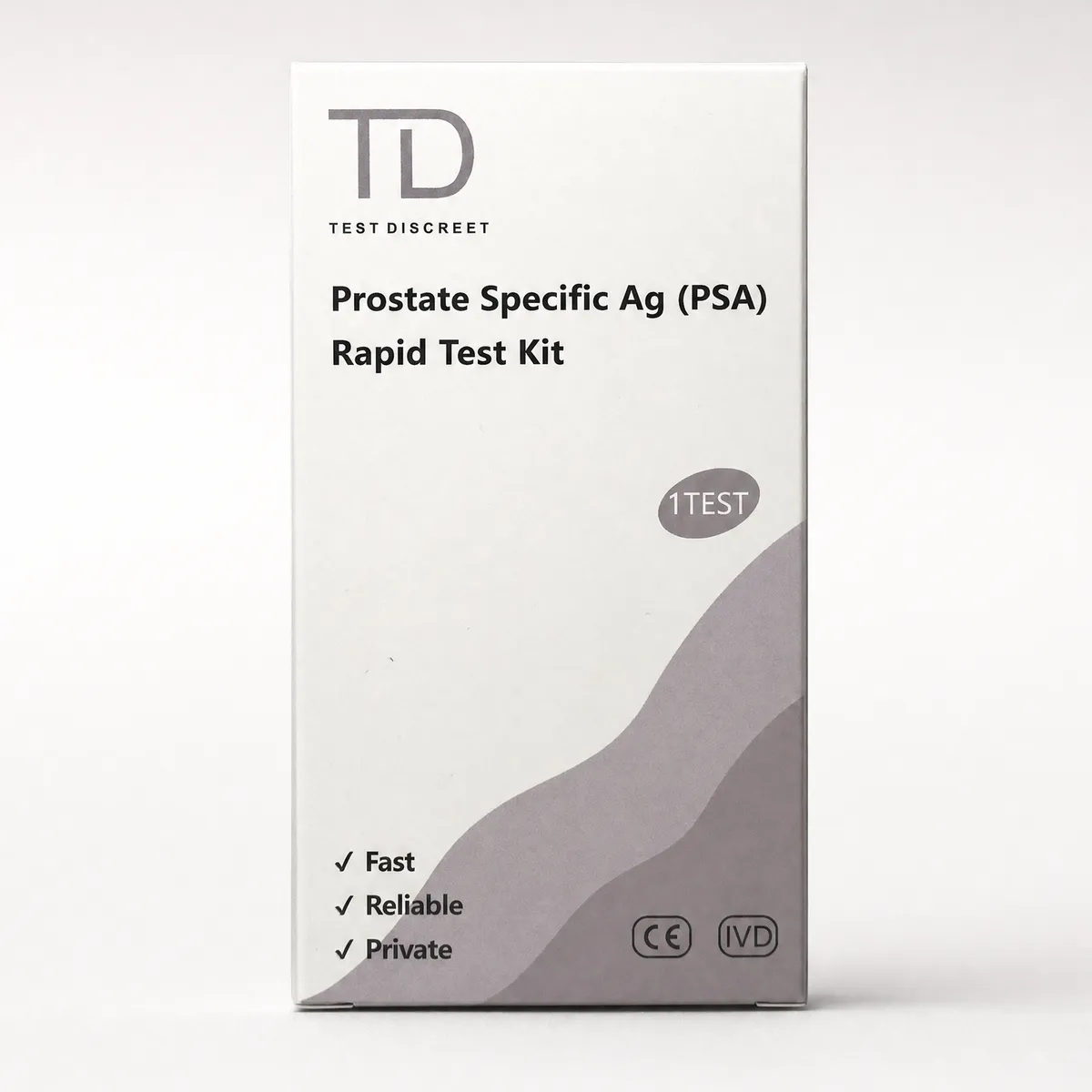
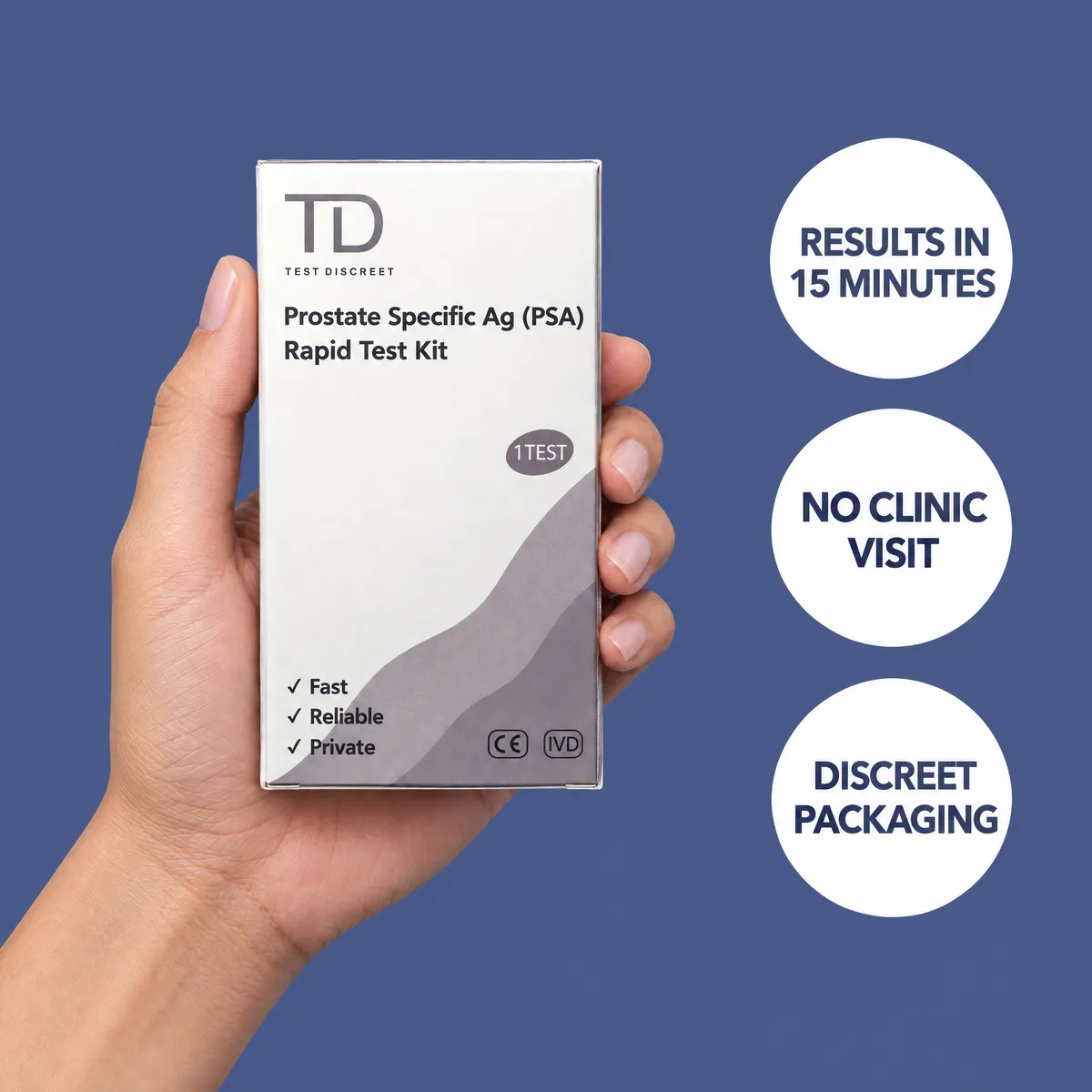
What’s in the box: test pad in a sealed pouch, 1 lancet, 2 alcohol pads, pipette, diluent (test liquid), waste bag and instruction leaflet.
Secure checkout · Discreet UK delivery · Ships within 1 working day
Discreet deliveryPlain packaging with nothing on the outside to reveal what’s inside.
About PSA and prostate testing
PSA (prostate specific antigen) is a protein made by the prostate, a small gland below the bladder that helps make semen. It’s normal to have some PSA in your blood, and levels can rise as you get older. Checking your PSA can help spot changes that may need looking into.
A PSA home test kit lets you check privately. You use a small finger-prick of blood, and the test shows whether your PSA is at or above 4 ng/mL in around 15 minutes, with nothing to post to a lab.
A raised PSA doesn’t necessarily mean you have prostate cancer. It can go up for many reasons, including:
- An enlarged prostate, which is common as men get older
- Inflammation or infection of the prostate, or a urine infection
- Recent ejaculation or anal sex
- Recent cycling or vigorous exercise
Sometimes a raised PSA can be a sign of prostate cancer, which is why a raised result should always be checked by your GP.
Many prostate problems cause no symptoms at first. Speak to your GP if you notice:
- Needing to pee more often, especially at night
- A sudden urge to pee
- Difficulty peeing
- Blood in your pee
- Problems getting or keeping an erection
These symptoms are often caused by an enlarged prostate rather than cancer, but they’re worth getting checked.
You don’t need symptoms to test. It may be worth testing if:
- You want to know whether your PSA is raised
- You’re worried about your prostate health
- You’d prefer to test privately at home
Have symptoms? Speak to your GP, even if your home test is negative.
How does the PSA home test work?
The test checks a small finger-prick blood sample to see whether your PSA level is at or above 4 ng/mL. It gives a yes-or-no style result, not your exact PSA number. Your result appears in around 15 minutes, with no sample to send to a lab. If you need your exact level, your GP can arrange a lab blood test.
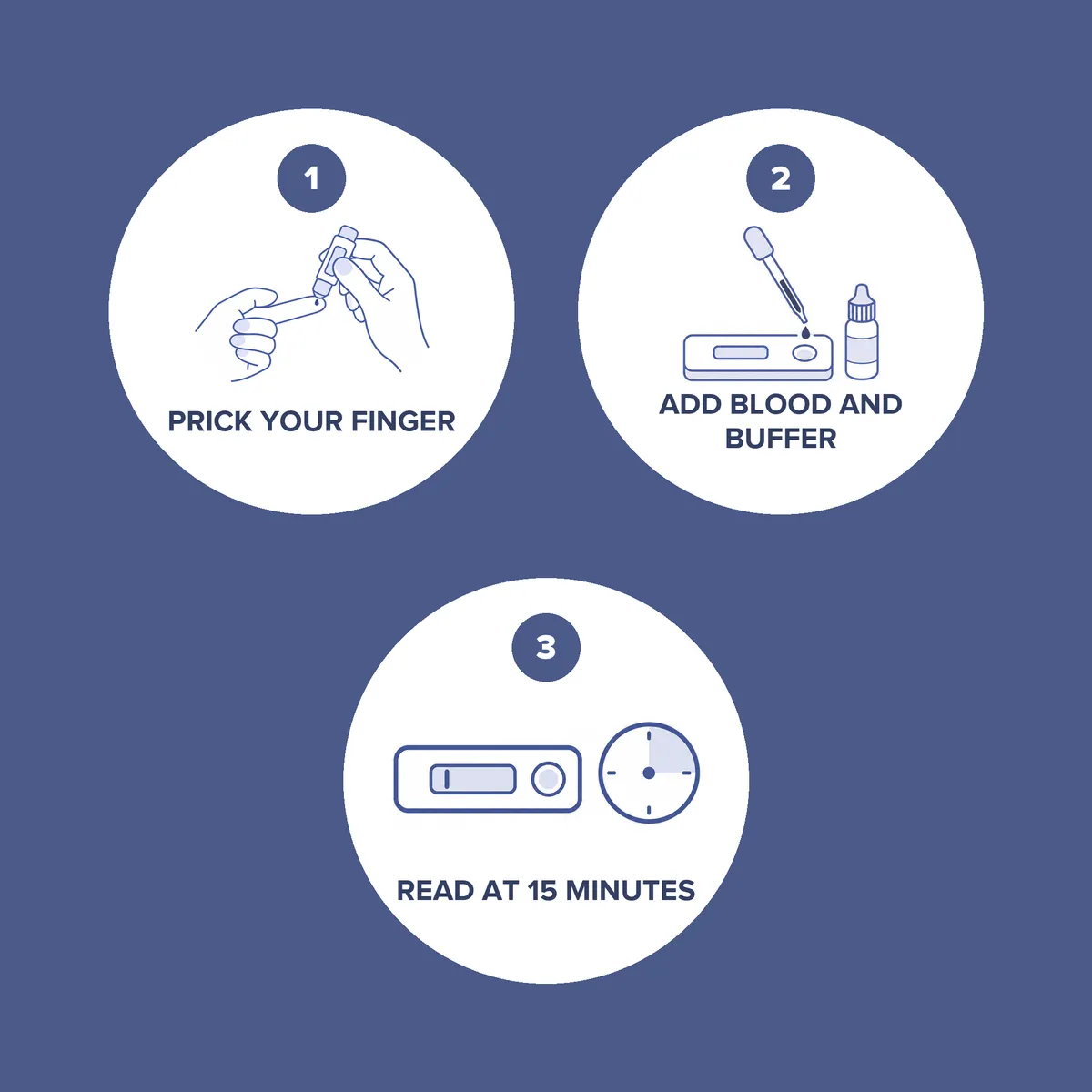
How to use the PSA test kit in 3 steps
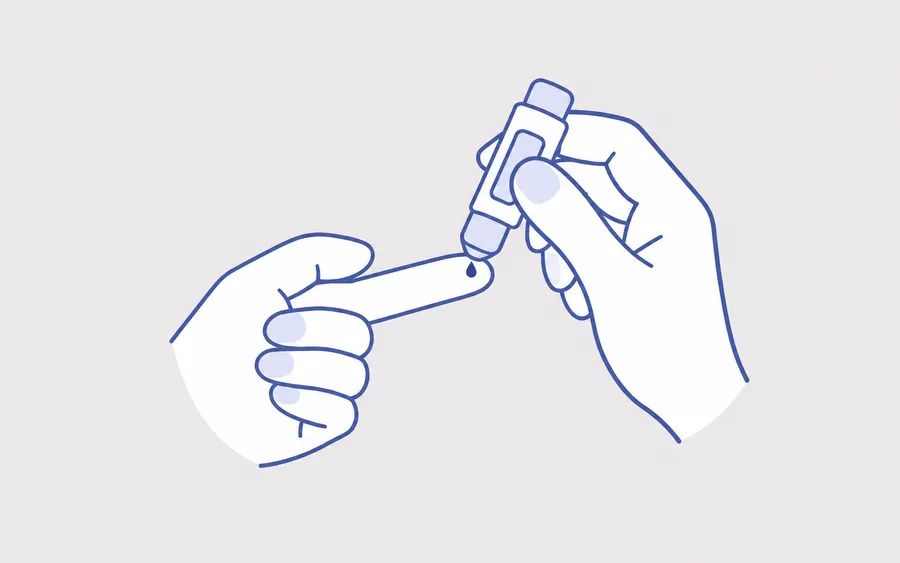
Prick your finger
Wash your hands and clean your fingertip with the alcohol pad. Let it dry, then use the lancet to prick the side of your fingertip.
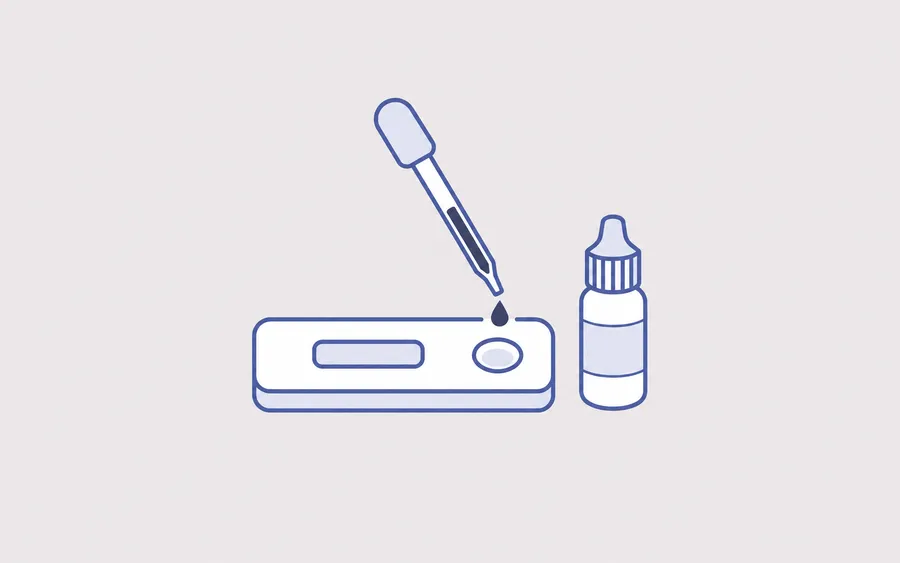
Add blood and diluent
Use the pipette to add 3 drops of blood to the sample well, then straight away add 1 drop of diluent (test liquid).
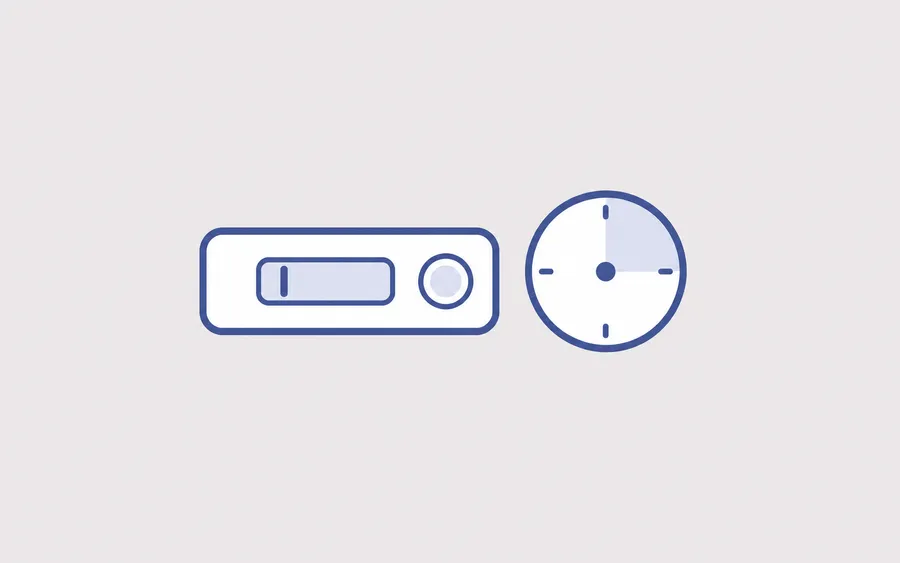
Read your result
Keep the test flat and read your result between 15 and 20 minutes. Results read after 20 minutes aren’t valid.
When should I take a PSA test?
You can test at any time of day, and you can eat and drink as normal. But some things can raise your PSA for a short time and give a misleading result, so it’s best to wait before testing.
| If you’ve recently… | Wait before testing |
|---|---|
| Ejaculated | 48 hours |
| Had anal sex | 48 hours |
| Been cycling | 48 hours |
| Done vigorous exercise | 48 hours |
| Had a urine infection | 4 to 6 weeks after it clears |
| Had a prostate procedure | Ask your GP when to test |
If you have symptoms, such as needing to pee more often or difficulty peeing, speak to your GP. Don’t wait for a home test.
How to read your PSA test result
Read your test between 15 and 20 minutes. Don’t read it after 20 minutes. C is the control line. T is the test line. With this test, it’s how dark the T line is that matters.
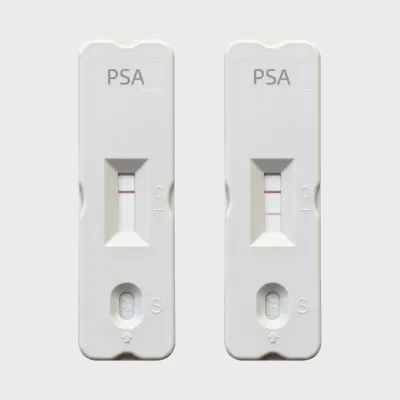
Negative (below 4 ng/mL)
One line at C only, or two lines where the T line is lighter than the C line.
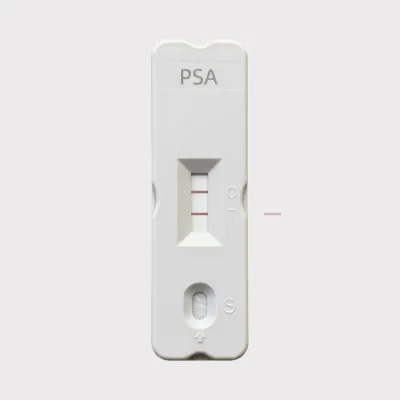
Positive (4 ng/mL or above)
Two lines where the T line is as dark as, or darker than, the C line. Book an appointment with your GP.
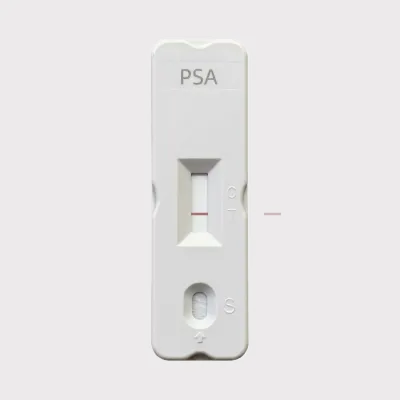
Invalid
No line at C, even if a T line shows. The test has not worked. Contact us and we’ll help.
Good to know
A raised result doesn’t always mean a prostate problem, but it’s important to talk to your GP. A result below 4 ng/mL doesn’t rule out all prostate problems, so see your GP if you have symptoms. This test doesn’t replace advice from a doctor or nurse.
PSA home test FAQs
Got a question? Ask now
About the test
No. It shows whether your PSA is below 4 ng/mL, or at or above it. A lab blood test arranged by your GP can measure your exact level.
You can test at any time of day. For the most reliable result, avoid ejaculation, anal sex, cycling and vigorous exercise for 48 hours before. If you’ve had a urine infection, wait 4 to 6 weeks after it clears. If you’ve had a recent prostate procedure, ask your GP when to test.
Compare the two lines. If the T line is lighter than the C line, the result is negative. If the T line is as dark as, or darker than, the C line, the result is positive.
Book an appointment with your GP. They may arrange another blood test and talk you through what happens next. A raised PSA doesn’t necessarily mean you have cancer.
Not necessarily. A result below 4 ng/mL doesn’t rule out all prostate problems. If you have symptoms or are worried, speak to your GP.
This test provides a simple way to check whether your PSA may be around 4 ng/mL or higher. Follow the preparation instructions and read your result between 15 and 20 minutes. If your result is raised, speak to your GP for further testing. If your result is negative but you have symptoms or concerns, also speak to your GP.
The kit includes a test pad in a sealed pouch, 1 lancet, 2 alcohol pads, a pipette, diluent (test liquid), a waste bag and an instruction leaflet.
About PSA and the prostate
A PSA test is a blood test that checks the level of prostate specific antigen, a protein made by the prostate. A raised level can be a sign of a prostate problem, such as an enlarged prostate, inflammation, infection or, sometimes, prostate cancer.
There isn’t one number that’s normal for everyone, because PSA naturally rises with age. This home test uses 4 ng/mL as its cut-off. If your result is raised, your GP will look at it alongside your age and health.
PSA can be raised by an enlarged prostate, a prostate or urine infection, inflammation, recent ejaculation or anal sex, cycling and vigorous exercise. Sometimes it can be a sign of prostate cancer, which is why a raised result should be checked by your GP.
No, not necessarily. Many things can raise PSA, and an enlarged prostate is a common cause. Your GP can arrange more tests to find out why your PSA is raised.
Your GP may offer a repeat PSA blood test. If your level is still high, they may refer you to a specialist for more tests, such as an MRI scan or a biopsy.
Yes, you can ask your GP. Routine PSA screening isn’t offered on the NHS for most people, but anyone with a prostate can ask their GP about a test. Your GP will talk you through the benefits and downsides first.
Yes. A PSA result isn’t always accurate. A raised level can lead to more tests that turn out not to be needed, and a normal level doesn’t rule out every prostate problem. That’s why it’s worth talking any result through with your GP.
Signs can include needing to pee more often, especially at night, a sudden urge to pee, difficulty peeing, blood in your pee, and problems getting or keeping an erection. Many prostate problems cause no symptoms at first.
Yes. Cycling and vigorous exercise can raise PSA for a short time. Avoid them for 48 hours before testing.
Ordering and other tests
No. Your order arrives in plain, discreet packaging with nothing on the outside to reveal what’s inside. Your bank statement won’t show “Test Discreet” or the name of the test. We ship within 1 working day.
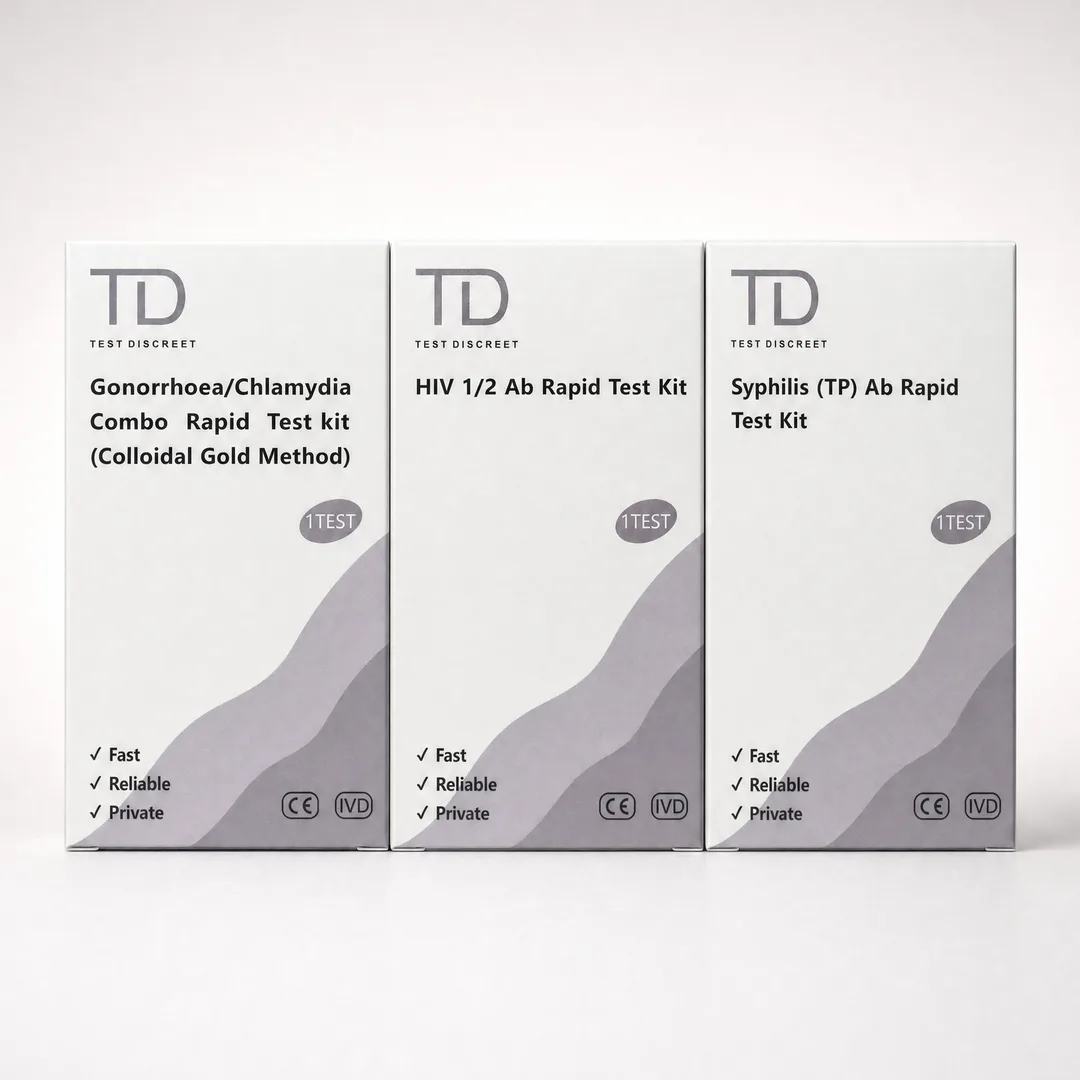
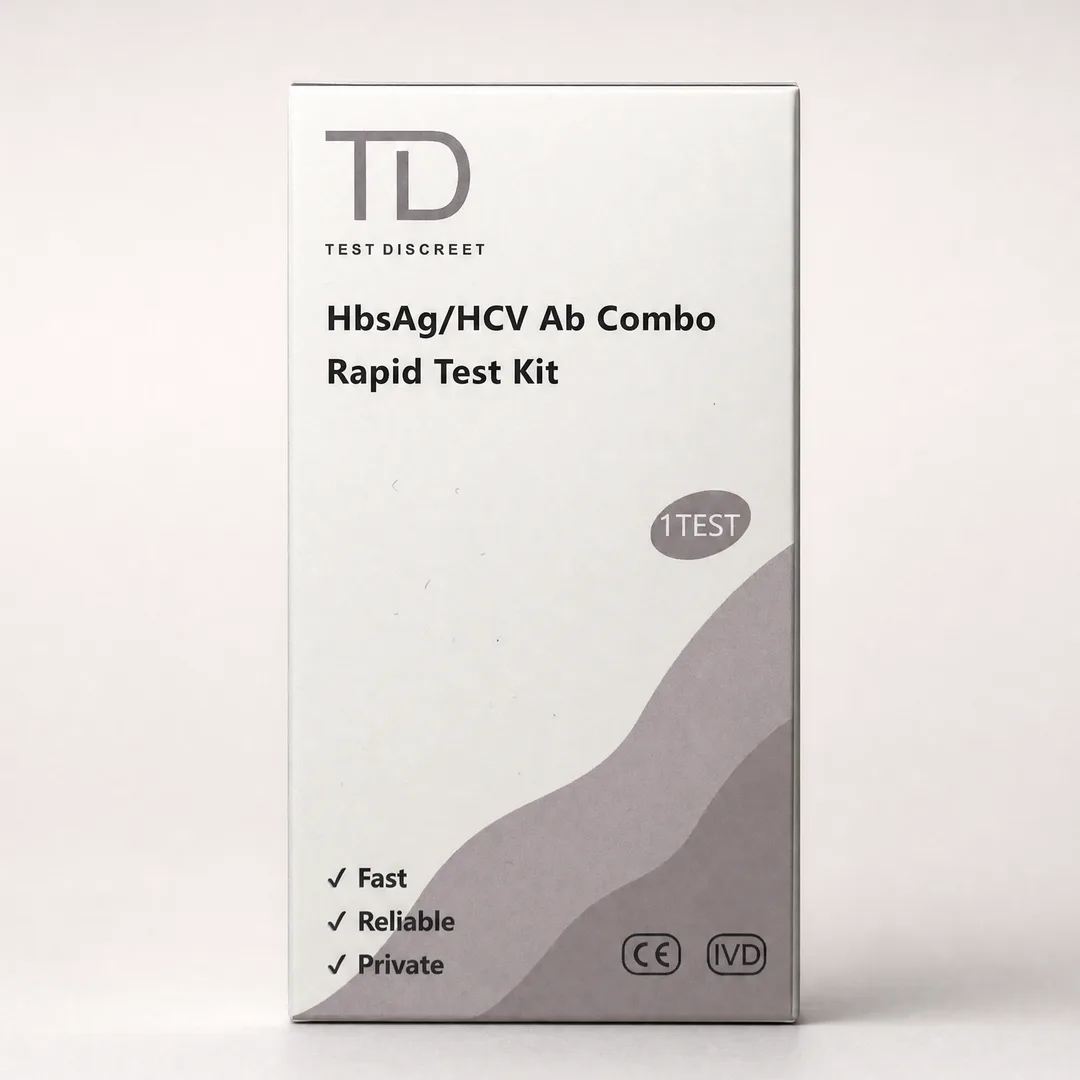
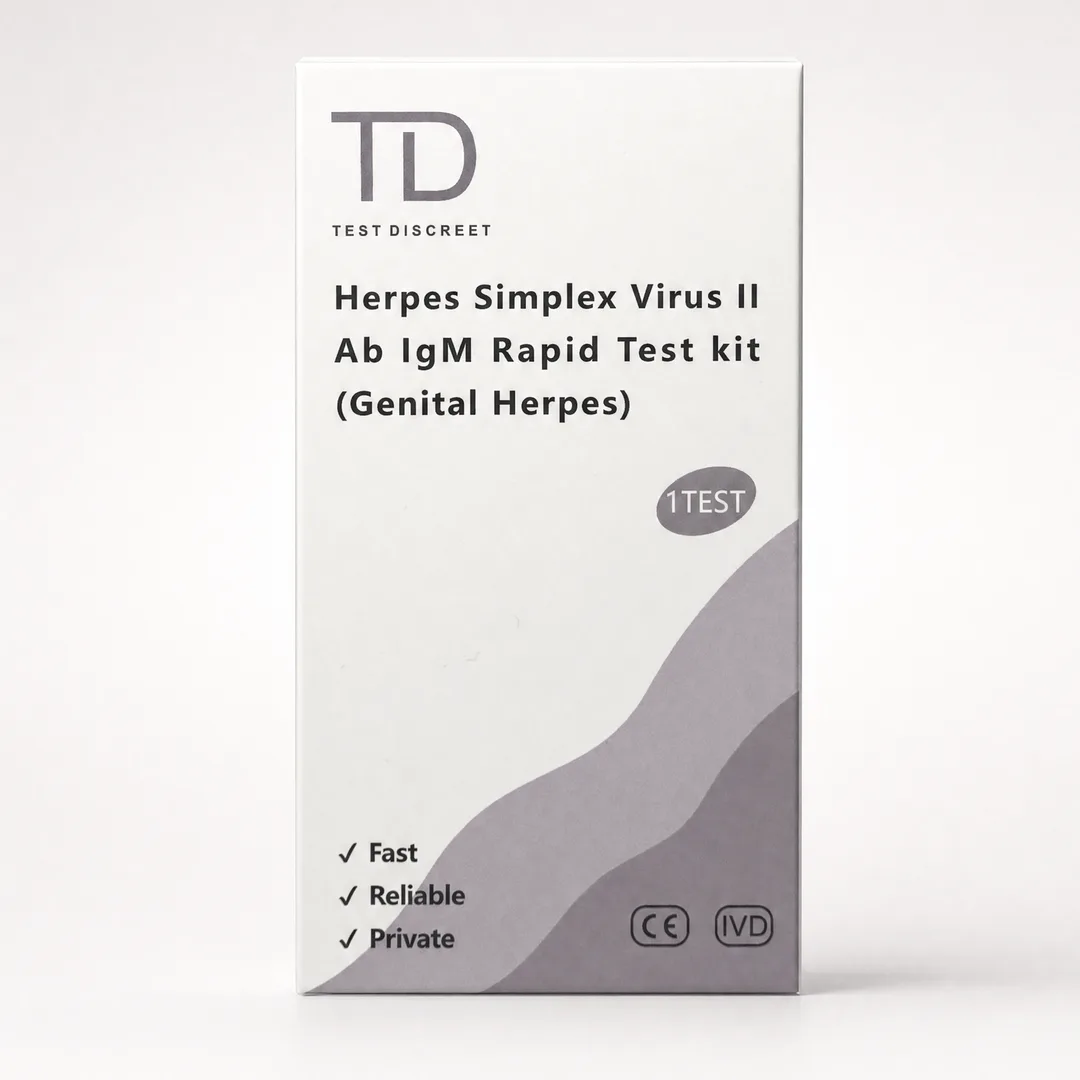
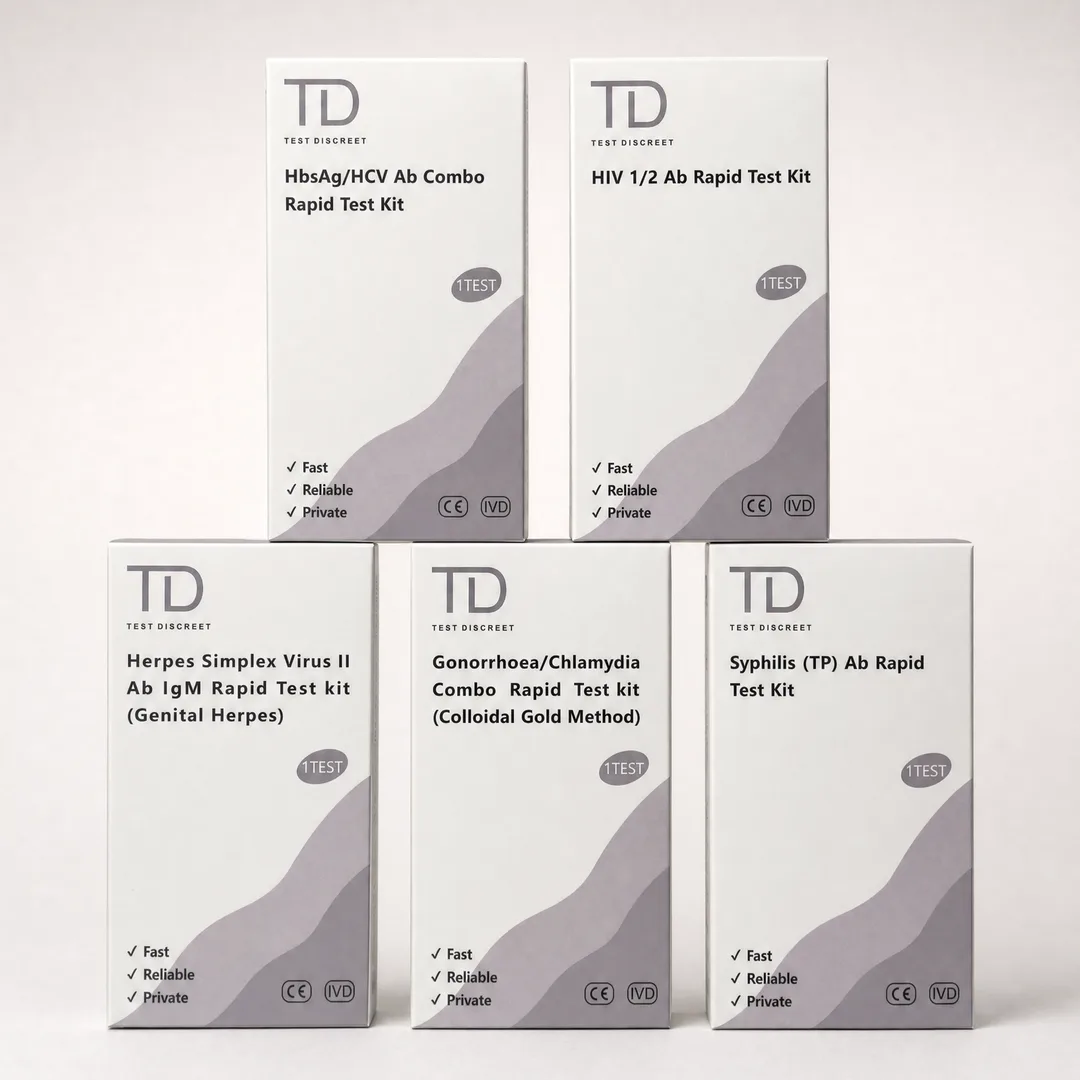
As well as PSA, we offer private home tests for sexual health, including HIV, syphilis, chlamydia and gonorrhoea, genital herpes and hepatitis B and C. Our 7-in-1 STI test bundle checks for 7 infections in one order.
Other private home test kits
All results in around 15 minutes.
 Best value
7-in-1 STI Test Bundle
- Chlamydia
- Gonorrhoea
- Syphilis
- HIV 1/2
- Genital herpes (HSV-2)
- Hepatitis B
- Hepatitis C
Blood + swab
£64.95
£98.75Save £33.80